
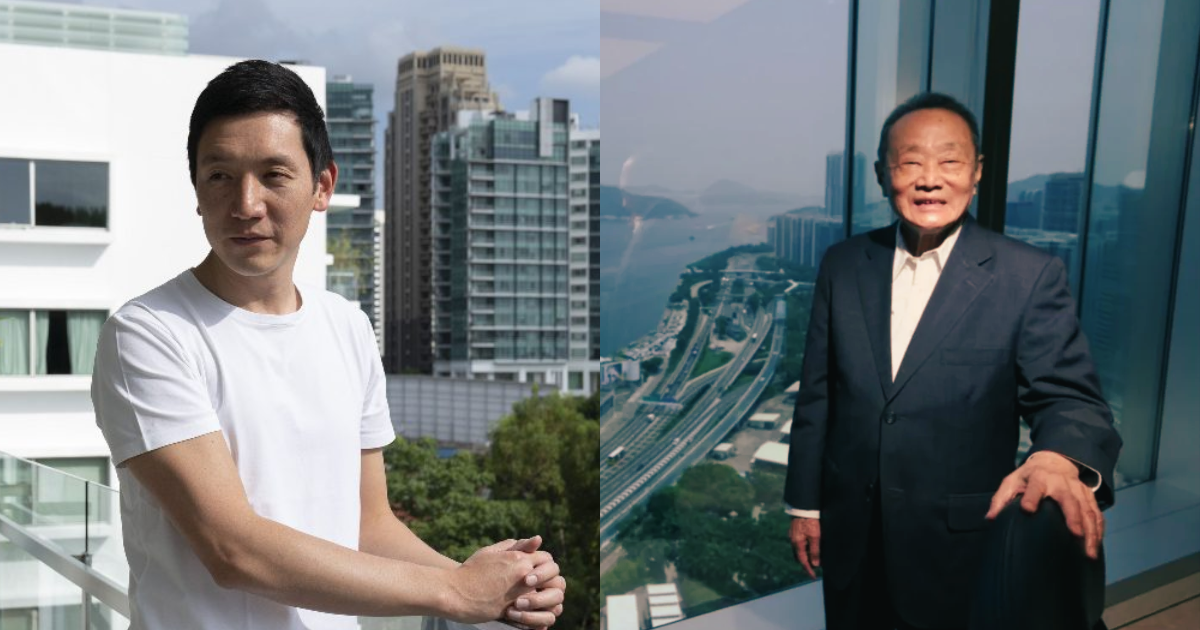
For decades, the name Robert Kuok has carried enormous weight across Asia’s business world. The Malaysian tycoon built one of the region’s most influential business empires, spanning commodities, agriculture, luxury hotels, shipping, logistics and property.
Now, a new generation of the Kuok family is quietly stepping into the spotlight.
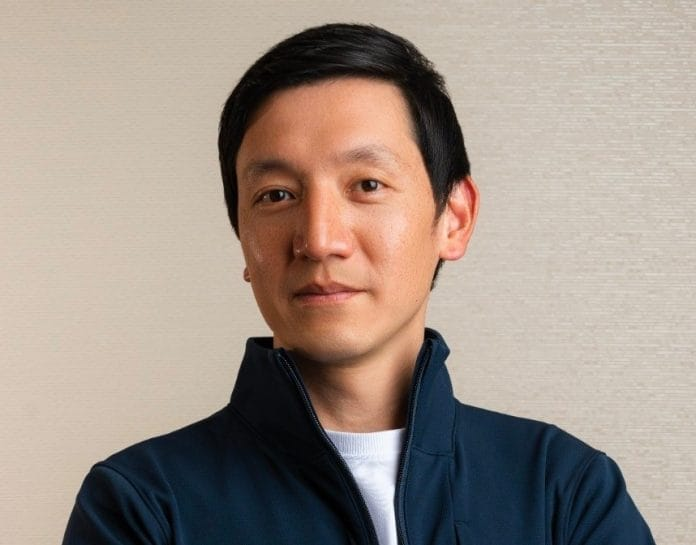
His grandson, Kuok Meng Xiong, has been appointed as a non-executive director of PPB Group, a publicly listed conglomerate with a market capitalisation of about RM16 billion.
The appointment, which took effect in March 2025, marks an important moment for the Kuok business empire, as the third generation of the family formally takes a seat at the boardroom table of one of Malaysia’s most established corporations.
But Meng Xiong’s story is not simply one of inheritance. His journey moves between global hotel operations, venture capital investments, and one of Southeast Asia’s most powerful family offices.
Kuok Meng Xiong: From Luxury Hotels to Venture Capital
Kuok Meng Xiong or MX, as this 3rd gen Kuok is known among friends, began his professional journey in the hospitality industry. He earned a bachelor’s degree in hotel administration from Cornell University, widely regarded as one of the world’s leading institutions for hospitality management. After graduating, he joined Shangri-La Hotels and Resorts, the flagship hospitality brand founded by his grandfather.
For nearly a decade, he worked on the group’s international expansion projects across Europe, West Asia and Sri Lanka, gaining exposure to the operational side of running a global luxury hotel chain. The experience allowed him to understand the realities of business operations, development planning and expansion strategy from the ground up, rather than stepping directly into a leadership role within the family empire.
After his years in hospitality, Meng Xiong moved into the technology investment space and founded K3 Ventures, a Singapore-based venture capital firm named after the third generation of the Kuok family. Through the firm, he has backed more than 50 startups, including major technology companies such as ByteDance and Grab Holdings.
These investments have positioned him within the fast-moving ecosystem of startups, venture capital and emerging technologies, a space very different from the commodities and agribusiness sectors that originally built the Kuok family fortune.
Inside PPB Group
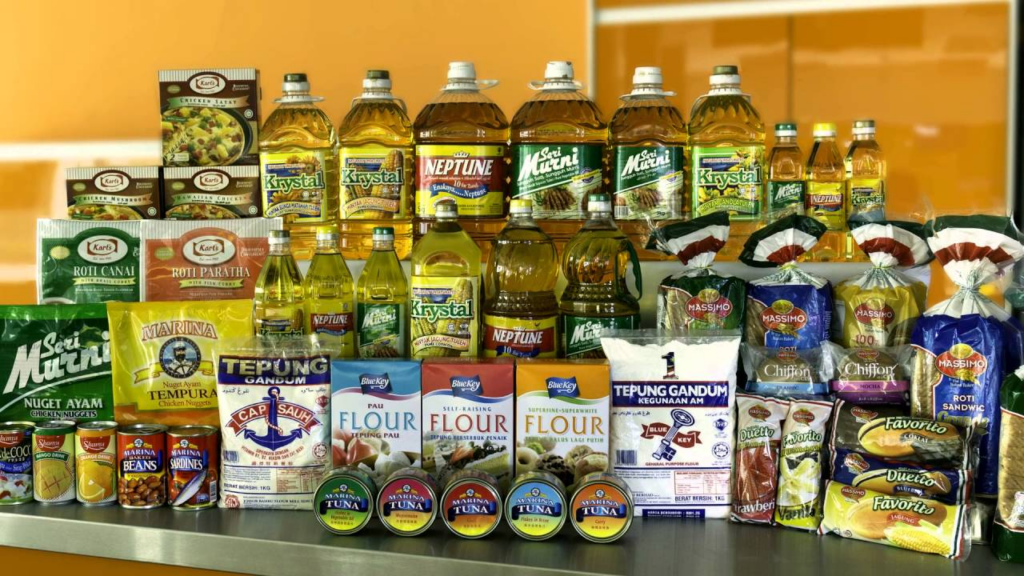
The company that Kuok Meng Xiong has joined is PPB Group, one of Malaysia’s most quietly influential conglomerates.
The group was founded in 1968 by Robert Kuok as Perlis Plantations Berhad, originally set up to cultivate and mill sugar cane in northern Malaysia. The company was later listed on the stock exchange in 1972, becoming an early pillar of the Kuok business empire.
Over the decades, PPB expanded far beyond its sugar plantation roots. Today, the group operates across agriculture, food production, entertainment, environmental engineering and property investment.
One of its key businesses is Federal Flour Mills (FFM), which has grown into Malaysia’s largest flour miller, with a daily milling capacity of more than 2,500 metric tonnes. FFM also operates mills in Vietnam, Thailand and China, extending PPB’s presence across regional food supply chains.
The group is also well known in Malaysia’s entertainment industry through Golden Screen Cinemas (GSC), one of the country’s largest cinema chains and film distributors with dozens of locations nationwide.
Beyond these businesses, PPB is involved in environmental engineering through Chemquest, which provides water treatment and waste management services, as well as property development projects across Malaysia.
Another major pillar of the group is its investment in Wilmar International, a Singapore-listed company and one of the world’s largest agribusiness and palm oil trading groups, with operations spanning plantation cultivation, food processing and global commodity trading.
PPB Group Reports Higher Core Profit in FY2025
PPB Group reported stronger performance in its core businesses in financial year 2025 (FY2025), with pre-tax profit rising 20 percent to RM1.6 billion, compared with RM1.33 billion in FY2024.
Profit from the group’s core business segments increased 41 percent to RM480 million, up from RM340 million a year earlier. The group also received a higher contribution from its associate Wilmar International, which rose 13 percent to RM1.12 billion, compared with RM992 million in FY2024.
Group revenue increased slightly to RM5.43 billion, compared with RM5.39 billion in FY2024.
However, PPB recorded a net loss of RM2.73 billion for FY2025, mainly due to a one-off impairment charge of RM4.17 billion related to its investment in Wilmar. In the fourth quarter alone, the group posted a net loss of RM3.19 billion, with revenue for the quarter at RM1.34 billion, compared with RM1.43 billion in the same period a year earlier.
Despite this, PPB maintained a strong balance sheet. Cash and bank balances rose 23 percent to RM2.03 billion, while borrowings fell 50 percent to RM193 million. This lifted the group’s net cash position to RM1.85 billion.
The company also declared a final dividend of 30 sen per share for FY2025, bringing the total dividend for the year to 42 sen per share, payable on June 4, 2026.
The Grandson of Asia’s “Sugar King”

Few Asian business figures carry the legacy of Robert Kuok. Born in Johor Bahru in 1923, he began his career trading rice after World War II through the family business Kuok Brothers.
However, fierce competition in the rice trade pushed him to pivot into sugar. That decision would prove transformative.
By the 1960s, Kuok’s companies were controlling a significant portion of the global sugar trade, earning him the famous nickname “The Sugar King of Asia.”
From those beginnings, the Kuok empire expanded rapidly into multiple industries. Robert Kuok went on to establish Shangri-La Hotels and Resorts, which today operates more than 100 luxury hotels and resorts around the world. His business interests eventually stretched across commodities trading, shipping, logistics, real estate, agribusiness and hospitality.
Today, Robert Kuok remains Malaysia’s richest individual, with a fortune estimated by Forbes at roughly US$14 billion. Even at over 100 years old, he continues to be regarded as one of Asia’s most influential business figures.
A Subtle Shift Toward the 3rd Kuok Generation

The appointment of Kuok Meng Xiong to the board of PPB Group represents more than a routine corporate move.
It signals a carefully managed generational transition inside one of Asia’s most enduring family business empires.
What makes Meng Xiong’s role particularly interesting is the combination of traditional business experience and exposure to new technology sectors. His time in global hotel operations reflects the legacy industries built by the Kuok family, while his venture capital activities connect him to the startups shaping the digital economy.
For an empire built on commodities, agriculture and hospitality, the involvement of a venture capitalist from the third generation suggests the Kuok family may increasingly bridge traditional industries with emerging technology and innovation.
And with one of Asia’s most storied business dynasties now entering its next phase, the rise of Kuok Meng Xiong may signal how the Kuok empire plans to stay relevant for the next fifty years.
Sources: 1| 2| 3| 4
Related articles:
Kuok Hui Kwong, The Harvard-Educated Heiress Now Leading Shangri-La Asia
This 3rd-Gen Kuok Is Transforming the Family Empire With a $10B AI Bet





Discussion about this post