
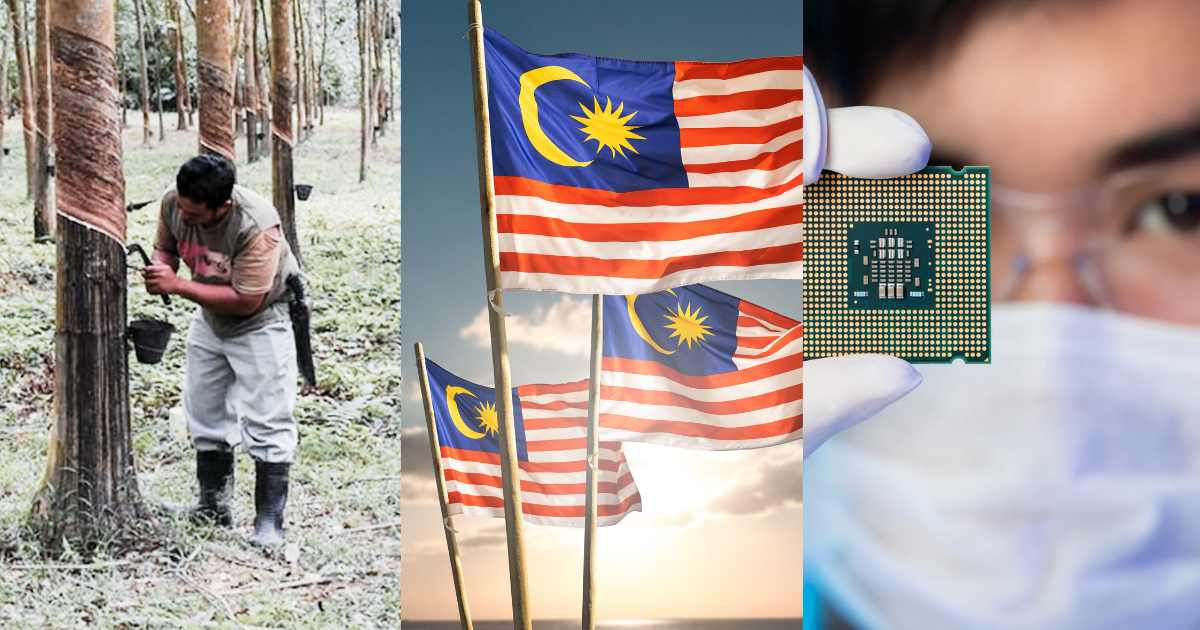
When Malaysia was formed on 16 September 1963, much of its economic strength came from the ground.
Rubber plantations stretched across the countryside, while tin mines provided jobs and valuable exports. Few could have imagined that the country would one day become an important part of the global semiconductor industry.
Today, electronic components produced in Malaysian factories help power smartphones, computers, vehicles, medical equipment and artificial intelligence systems worldwide.

As the country celebrates its Malaysia Day, here is how Malaysia transformed from a commodity-dependent economy into a diverse manufacturing, services and technology hub.
When Rubber And Tin Powered The Economy
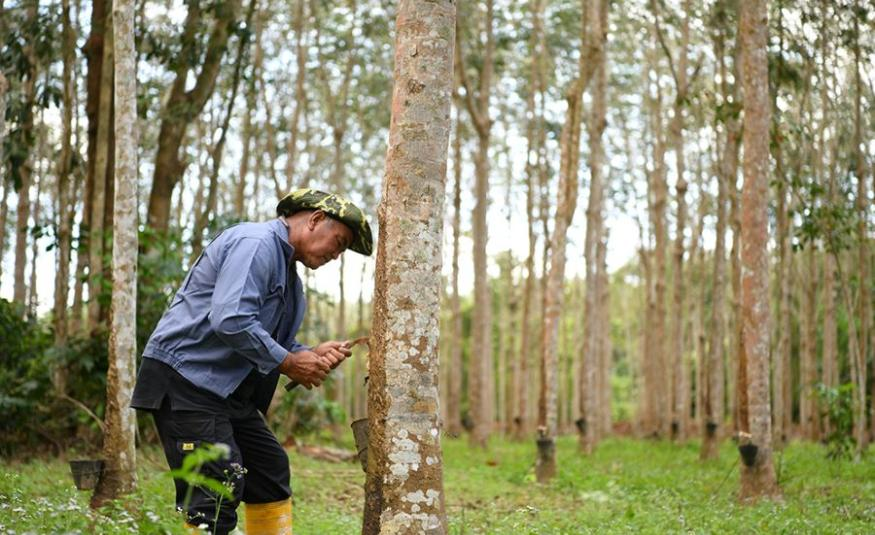
During its early years, Malaysia relied heavily on natural resources.
Rubber was needed for products such as tyres and industrial equipment, while tin was widely used in manufacturing, construction and packaging.
Together, rubber and tin represented more than half of the country’s export value in 1970. Agriculture and mining were not merely economic sectors. They supported families, towns and businesses across the country.
However, depending heavily on a small number of commodities was risky. Global price changes could quickly affect workers, companies and government revenue.
For the economy to progress, Malaysia needed to produce and export more than raw materials.
Palm Oil And Petroleum Created New Sources Of Growth
Economic diversification accelerated as the country expanded into palm oil, petroleum and natural gas.
Palm oil became one of Malaysia’s most important agricultural products. The industry created jobs through plantations, processing facilities, refineries, transportation and exports.
Meanwhile, the establishment of Petronas in 1974 allowed the country to manage its petroleum resources while building expertise in energy, engineering and international operations.
Petroleum and natural gas became especially important to Sabah, Sarawak and Terengganu. The industry also supported the growth of related businesses in engineering, logistics, shipping and professional services.
Malaysia was still benefiting from natural resources, but it was gradually learning how to process them, develop supporting industries and create greater economic value.
Factories Changed The Direction Of Malaysia
From the 1970s onwards, greater attention was given to manufacturing.
Industrial zones were developed, infrastructure improved and foreign companies were encouraged to establish factories. Penang became one of the country’s earliest and most important electrical and electronics manufacturing centres.
These factories created new opportunities for production workers, technicians, engineers, managers and researchers.
The automotive industry also became part of the country’s industrial ambition. Proton was established in 1983, while the first Proton Saga was launched in 1985.
The national car project helped develop an automotive supply chain involving component manufacturers, engineers, distributors, workshops and thousands of workers.
Over time, Malaysia also expanded into chemicals, machinery, aerospace components, food processing and precision engineering.
Electrical And Electronics Became The New Powerhouse
The most significant change came through the rapid growth of the electrical and electronics industry.
In 2025, Malaysia exported a record RM711.61 billion worth of electrical and electronic products. The sector represented 44.3% of the country’s total exports.
Electronic integrated circuits alone generated RM389.15 billion in exports, an increase of 24.3% compared with the previous year. Growth was supported by rising demand for digitalisation, automation and artificial intelligence.
Manufactured goods collectively contributed RM1.388 trillion, or 86.4% of total exports. In comparison, agricultural products represented 7%, while mining goods contributed 5.7%.
These figures reveal how dramatically the economy has changed. The country that once relied mainly on what it could extract or grow now earns most of its export income from what its factories can produce.
Why Microchips Made Malaysia Important To The World
Semiconductors are small components, but they are essential to modern life.
They are found inside smartphones, computers, vehicles, household appliances, medical devices, telecommunications equipment and data centres.
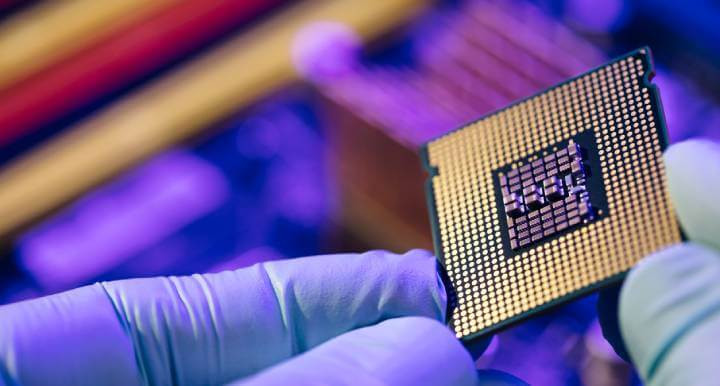
Over several decades, Malaysia developed strong capabilities in semiconductor assembly, testing and packaging. Penang became known as the “Silicon Valley of the East,” while Kulim, Selangor and Johor attracted further technology investments.
Major international companies established local operations, creating opportunities for manufacturers, engineering firms, logistics providers and small businesses.
This placed Malaysia inside one of the world’s most important supply chains. A product may be designed in one country and sold in another, but part of its semiconductor journey could still pass through a Malaysian factory.
Healthcare Manufacturing Reached The World
Another industry that gained global recognition was healthcare manufacturing.
Malaysia became a major producer of rubber gloves, medical devices, diagnostic equipment and other healthcare products. Its long history in rubber production provided an advantage, but local businesses eventually moved beyond supplying raw material.
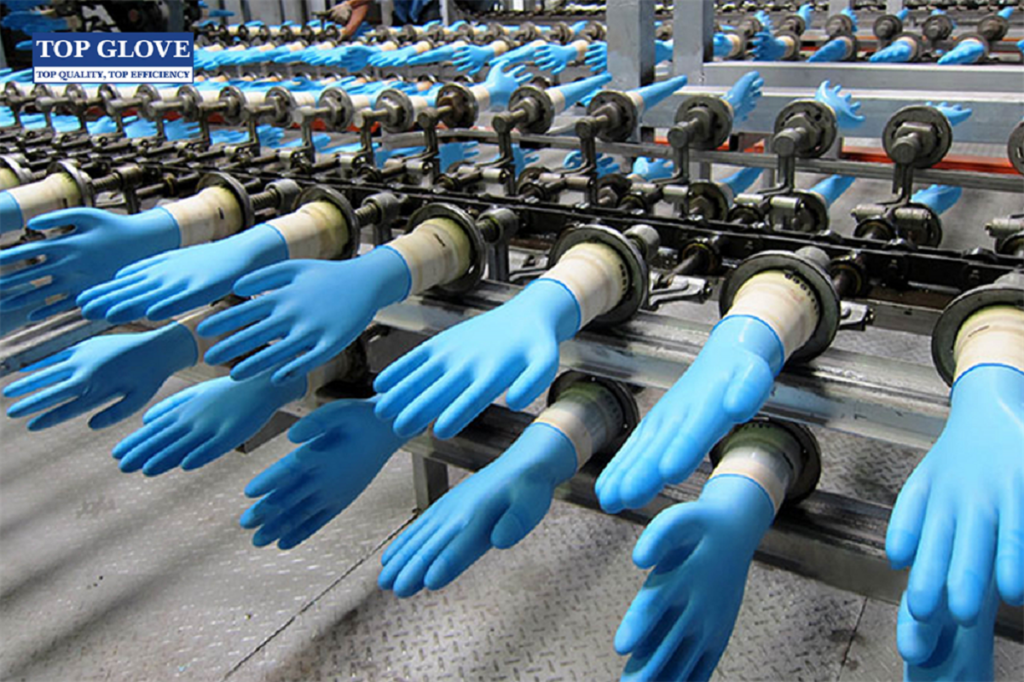
They began manufacturing finished medical products for hospitals, clinics and laboratories around the world.
The sector showed how an older industry could evolve. Rubber, once exported mainly as a commodity, became the foundation for higher-value manufactured products supported by research, automation and quality control.
Services Became The Largest Part Of The Economy
While factories and exports played a major role, Malaysia’s development was not limited to physical products.
The services sector grew through banking, retail, telecommunications, transportation, education, healthcare, property, professional services and tourism.
Kuala Lumpur developed into a regional business and financial centre. The country also became an important name in Islamic banking, sukuk and takaful, offering financial products that complied with Shariah principles.
Tourism created opportunities for hotels, restaurants, airlines, transport operators and small traders. Destinations such as Langkawi, Melaka, Penang, Sabah and Sarawak attracted visitors through their food, culture, history and natural beauty.
This expansion made the economy more diverse while creating new careers that did not exist during the early years of the country.
The Digital Economy Opened Another Chapter
The arrival of the internet created another wave of transformation.
Malaysian businesses began selling through e-commerce platforms, accepting digital payments and reaching customers through social media. Technology companies expanded into software, financial technology, cybersecurity, cloud services and data centres.

Small businesses could now market products nationwide without opening branches in every state. Local entrepreneurs also gained access to customers beyond the country’s borders.
The next stage is likely to be shaped by artificial intelligence, robotics, automation and advanced digital services.
The Next Transformation Has Already Begun
The Malaysian economy expanded by 5.2% in 2025, while total trade exceeded RM3 trillion for the first time.
However, the journey is far from complete.
Much of the country’s semiconductor activity has traditionally focused on assembly, testing and packaging. The next challenge is to move further into chip design, advanced packaging, research and locally owned technology.
Malaysia must also produce more highly skilled workers, strengthen local companies and ensure that economic opportunities reach communities across Peninsular Malaysia, Sabah and Sarawak.
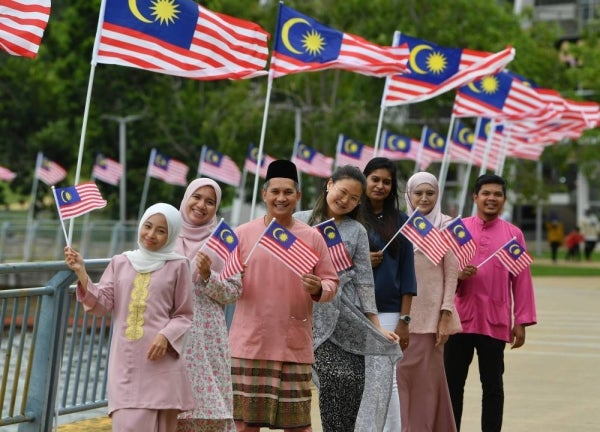
The country’s transformation is not simply about replacing rubber and tin with microchips. It is about learning how to create greater value from its resources, people and ideas.
From plantations and mines to banks, factories, airports and semiconductor facilities, every industry has contributed a different chapter to the Malaysian story.
This Malaysia Day, the country can celebrate how far it has travelled while recognising that its next great economic transformation is still being written.
Sources: 1 | 2 | 3 | 4
Related articles:
Merdeka Special: Anwar Unveils Six Initiatives To Ease Living Costs
Where Did Malaysia’s Prime Ministers Study?




Discussion about this post